IT Service Management System
An IT Service Management System proves, firstly, how your organisation designs, delivers, and continually improves IT services — from incident response to change management — audited against the international standard for service management. In other words, it turns day-to-day IT delivery into a repeatable, measurable process rather than a set of informal habits.

Service delivery, run as a system: what an IT Service Management System covers
In short, ISO/IEC 20000-1:2018 is the international standard behind an IT Service Management System. Specifically, it applies to any organisation that plans, delivers, operates, and improves IT services — whether for internal users or external customers — and, as a result, gives that delivery a structured, auditable framework rather than a set of informal habits.
Consequently, the standard covers the full service lifecycle: service design and transition, incident and problem management, change and configuration management, capacity and availability planning, and supplier management. Notably, this is closely aligned with widely used ITIL practice, but framed instead as auditable management system requirements rather than best-practice guidance alone.
Therefore, an effective IT Service Management System demonstrates that service levels, escalation paths, and continual improvement are not dependent on any one person's knowledge, but are instead built into how the organisation runs day to day. Additionally, you can read more about how this fits alongside our wider ISO certification services, and you can also view the full official standard documentation for technical reference.
Who relies on an IT Service Management System
Because dependable IT delivery underpins very different business models, an IT Service Management System applies broadly. However, it delivers the most value wherever service levels are contractual, complex, or business-critical. So, in practice, that spans the following sectors:

IT service providers & MSPs
Managed service providers demonstrating capability to clients.
Enterprise IT departments
Internal IT functions supporting large or complex organisations.
Data centre & hosting providers
Infrastructure providers with formal service level commitments.
BPO & outsourcing providers
Organisations delivering IT-enabled services under contract.
Software & SaaS vendors
Vendors with service delivery and support commitments to customers.
Telecom & network operators
Providers managing service delivery across networked infrastructure.
What an IT Service Management System changes on the ground
Once implemented, this kind of system tends to reshape day-to-day service delivery rather than just paperwork. For instance:
Fewer service disruptions
Structured incident and problem management reduces recurring outages.
Stronger SLA management
Clear service levels and reporting improve customer confidence and retention.
Competitive tender advantage
Certification is increasingly a qualifying criterion in IT outsourcing bids.
Controlled change management
Formal change and configuration control reduces self-inflicted incidents.
Better supplier oversight
Structured supplier management processes reduce third-party service risk.
Continual service improvement
Built-in review cycles keep service delivery improving as demand changes.
Our certification process for an IT Service Management System
Getting your IT Service Management System certified with IEMA follows a structured, EGAC-accredited audit pathway from application to certificate issuance, and beyond. Consequently, each stage builds on the last:
Application & contract review
We scope your certification boundary — services, sites, and supplier relationships — and confirm audit duration and pricing.
Documentation review
Your service management policy, service catalogue, and system documentation are reviewed against ISO/IEC 20000-1:2018.
Stage 1 audit
An on-site readiness assessment confirming your system is implemented and prepared for the certification audit.
Stage 2 audit
Full evaluation of implementation and effectiveness across incident, change, and capacity management.
Certification decision
An independent technical committee reviews audit findings ahead of the certification decision.
Certificate issuance
Your ISO/IEC 20000-1:2018 certificate is issued, valid for three years under the EGAC accreditation scope.
Surveillance & recertification
Annual surveillance audits maintain certification; a recertification audit renews it at the three-year mark.
Meanwhile, for a broader look at how audits are structured across standards, see our certification approach, or, alternatively, explore our related testing services for infrastructure and systems verification.
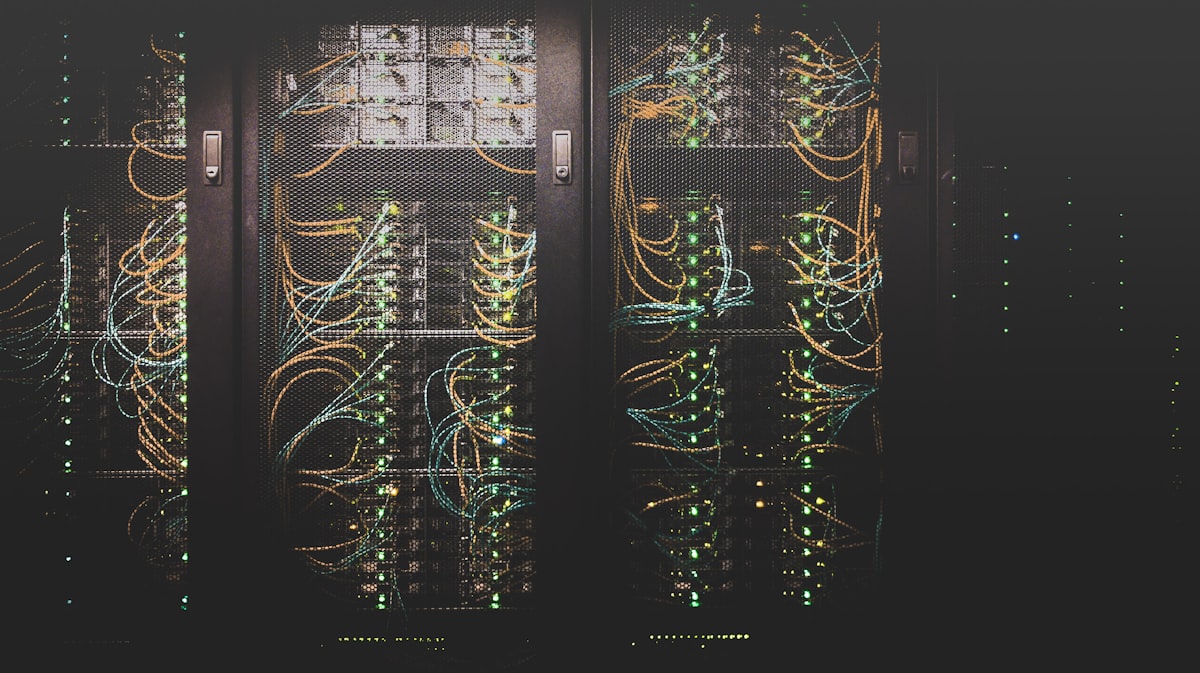
Change and configuration control — a core audit focus area for this type of certification.
What your IT Service Management System needs in place
Above all, these form the baseline our auditors assess against during Stage 1 and Stage 2 of your audit:
- A documented service management policy and objectives
- A service catalogue and defined service level agreements
- Incident and problem management procedures
- Change and configuration management controls
- Capacity and availability management processes
- Supplier and third-party service management procedures
- Service reporting and customer satisfaction measurement
- Internal audit and management review records
Who audits your IT Service Management System
Accredited, independent, and Nigerian-based, IEMA Standards Ltd is accredited by the Egyptian Accreditation Council (EGAC), a full IAF/ILAC Multilateral Recognition Arrangement signatory — so, in practice, your certificate carries international standing rather than local-only recognition.
EGAC
Accredited by the Egyptian Accreditation Council, a full IAF/ILAC MLA signatory — our certificates carry international standing.
Scope
Certification, compliance, and consultancy across ISO management system standards, alongside AML/due diligence and cybersecurity advisory.
Group
Supported by affiliated entities Ecora Consulting Limited and Primose Technologies Ltd for wider advisory and technical capability.
Headquartered at 27A Alternative Drive, Chevron, Lekki, Lagos, IEMA serves clients across Nigeria and, moreover, the wider African market.
Ready to Put an IT Service Management System in Place?
Start with an application and scoping review to find out exactly what certification requires for your organisation.